
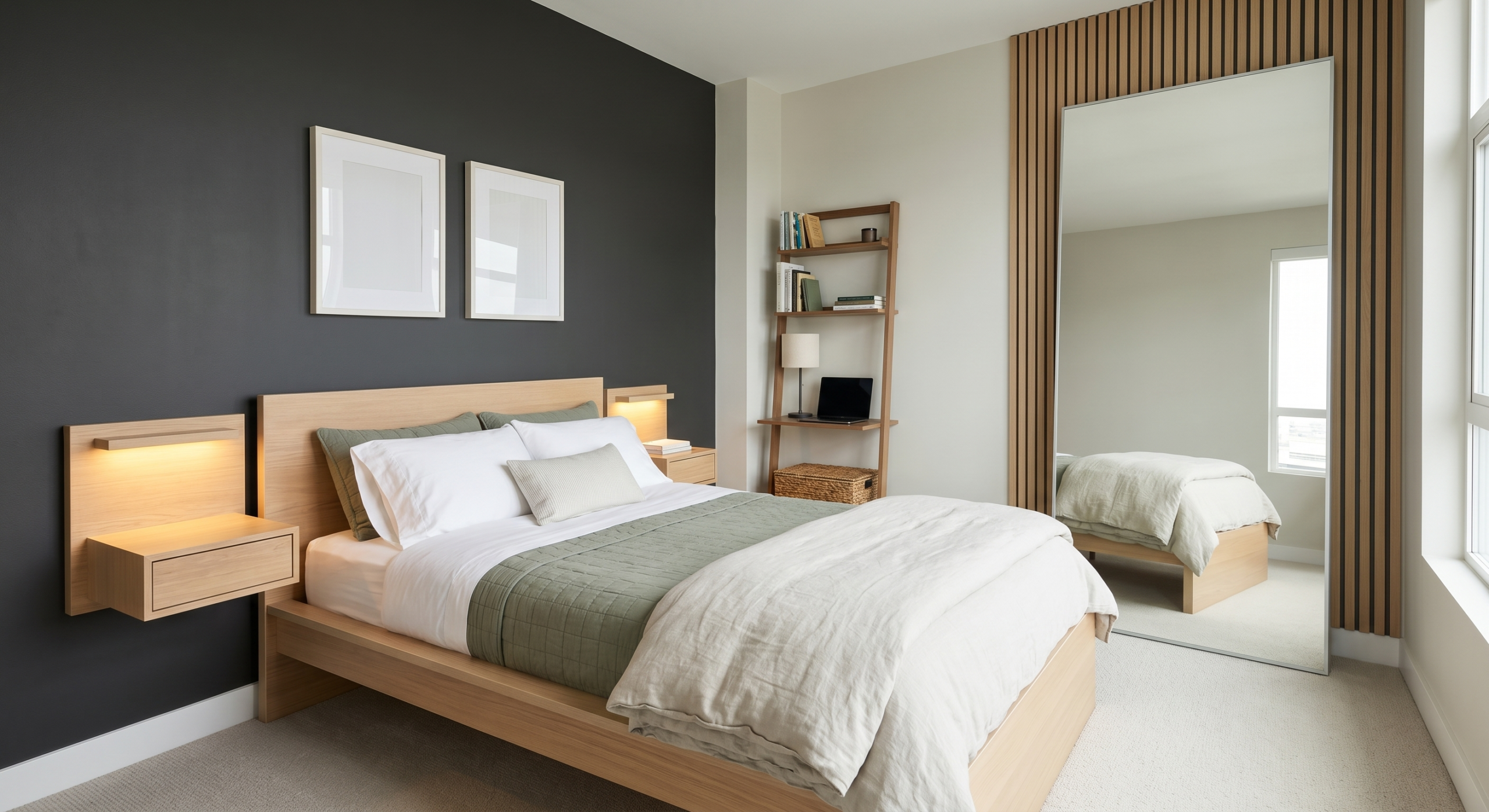
1. The “Low-Profile” Bed Frame Hack for Small Rooms
We’ve all been there—staring at a cramped bedroom and feeling like the walls are closing in. When you can barely walk around the foot of the bed without stubbing your toe, the room stops being a sanctuary and starts feeling like a storage unit. The biggest culprit? That massive, chunky bed frame you bought years ago.
To fix this, swap your heavy bed for a low-profile platform frame. By dropping the height of your mattress closer to the floor, you create a massive amount of “negative space” above the bed. This trick fools your brain into thinking the ceiling is much higher than it actually is. Skip the footboard entirely to keep the sightline clear from the door to the window. It opens up the floor plan and makes a tiny 10×10 room feel airy.
Pro-Tip: If you’re worried about losing under-bed storage, look for a “floating” platform base. It sits slightly recessed, so the bed looks like it’s hovering. You get the sleek look without losing every inch of stowing space.
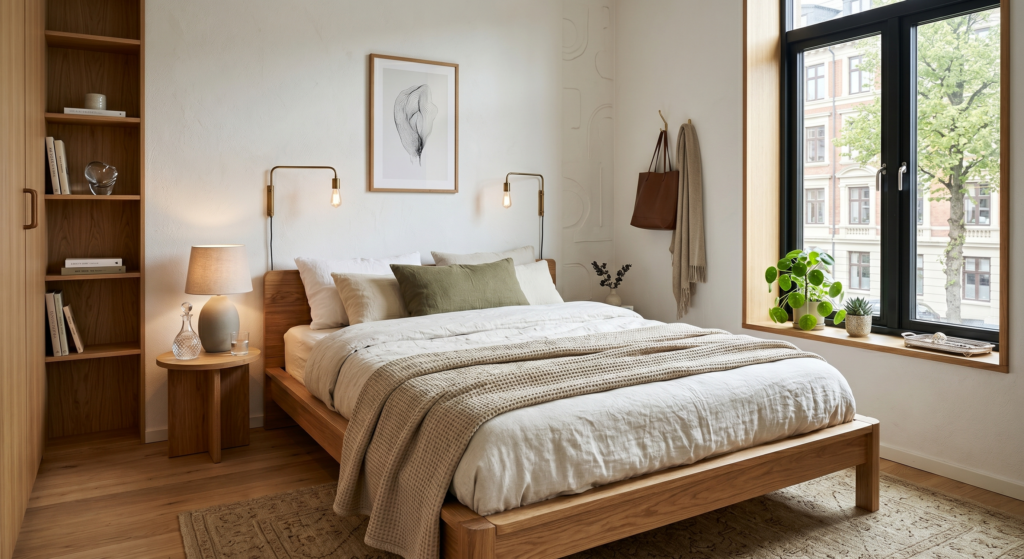
2. Moody Charcoal Accent Walls That Don’t Feel Dark
I get it—dark paint is intimidating. You see a beautiful charcoal wall in a magazine, but you’re terrified that if you try it at home, your bedroom will end up looking like a literal cave. Most people shy away from deep colors because they think it makes a room shrink, but when done right, it actually adds infinite depth.
The secret is to limit the dark hue to the wall behind your headboard. This creates an anchor point for the room. To keep it from feeling cold, swap your “daylight” or “cool white” bulbs for “soft white” (around 2700K). The yellow undertones in the light hit the charcoal paint and create a glow that feels sophisticated and snug. Contrast the dark wall with crisp white bedding to pull the look together.
Budget-Friendly Hack: Instead of buying expensive art for that dark wall, hang a simple oversized wood frame with a white mat. The contrast against the charcoal looks like a high-end gallery installation for about $30.
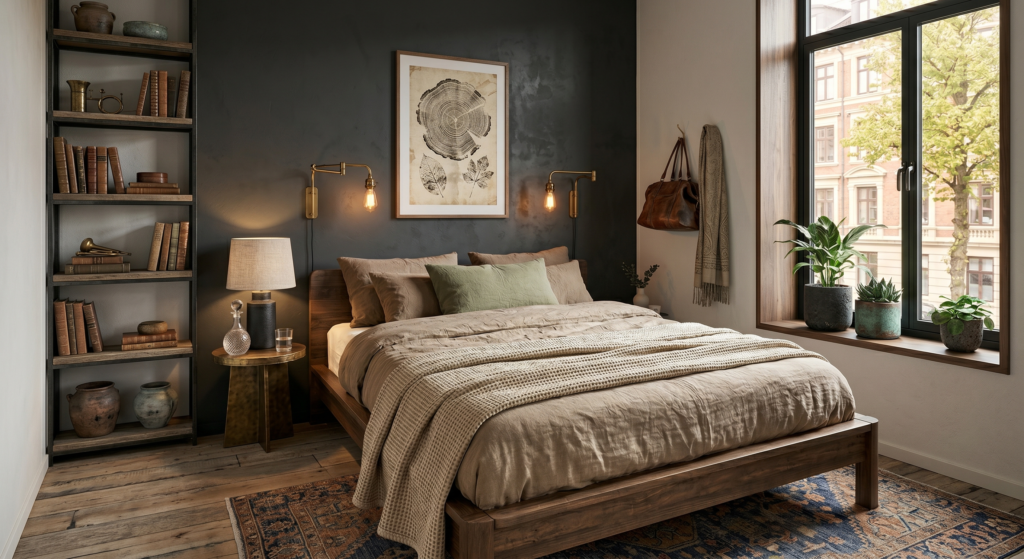
3. Built-In Bench Seating for Extra Storage
Nothing kills a room’s vibe faster than clutter you have no place for. I see it all the time: bulky winter coats and spare comforters stuffed into the back of a closet until the door won’t shut. You need more storage, but adding another heavy dresser just makes the room feel crowded.
A window bench is the ultimate double-duty hero. By building a simple box bench under a window, you gain a cozy perch and a massive “trunk” for storage. Use a flip-top lid or deep drawers in the base. Because it sits low and hugs the wall, it doesn’t eat up the “visual volume” of the room like an armoire would. It turns an unused wall into the most functional spot in the house.
Pro-Tip: Don’t spend thousands on custom cabinetry. Buy two sturdy kitchen wall cabinets, set them side-by-side on the floor, and add a stained wood plank across the top. It looks custom but costs a fraction of the price.
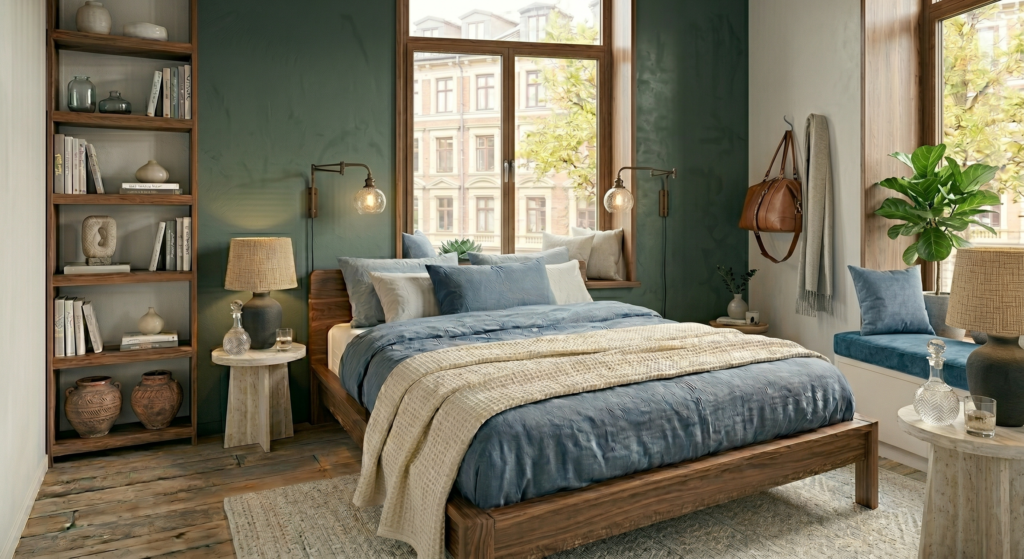
4. Floating Nightstands to Save Floor Space
Cleaning a small bedroom shouldn’t feel like an Olympic sport. We’ve all struggled with trying to wedge a vacuum cleaner nozzle between a heavy nightstand and the bed frame, only to give up and let the dust bunnies win. Traditional nightstands with four legs just add “visual noise” to a room that needs to be calm.
Floating nightstands are a game changer. By mounting your bedside tables directly to the wall, you leave the floor underneath completely clear. This makes the floor look continuous, which tricks the eye into seeing more square footage. It’s a cleaner, more modern look that also happens to make Saturday morning chores a breeze.
Pro-Tip: If you’re a renter and can’t drill big holes, look for “floating” shelves that use heavy-duty adhesive or small finishing nails. They can hold your phone and a glass of water without damaging the drywall.
5. Layered Organic Bedding for a Five-Star Hotel Feel
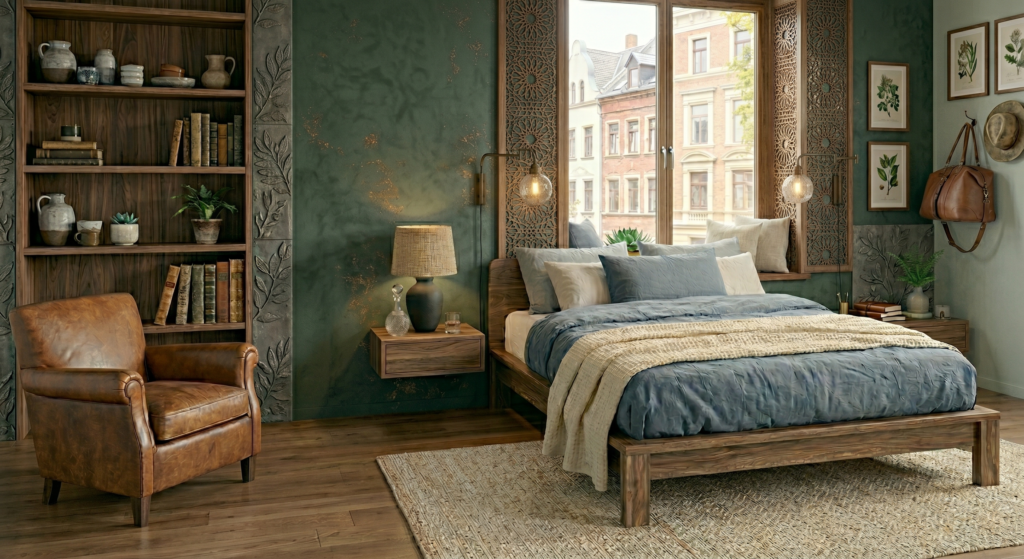
Have you ever noticed how hotel beds look so much better than the ones at home? You buy a “bed-in-a-bag” set, throw it on, and it just looks… flat. It lacks that cozy, sink-in quality that makes you never want to leave your room. The problem isn’t the bed; it’s the lack of texture.
The goal is to layer your fabrics. Start with high-quality cotton sheets, then add a medium-weight cotton quilt. Top it off with a linen duvet cover folded at the foot of the bed. Mixing these different materials—crisp cotton and rumpled linen—creates a “lived-in” luxury. It looks expensive because it has dimension, and it’s more comfortable because you can peel back layers depending on the temperature.
Pro-Tip: To get that extra-fluffy “cloud” look on your duvet, use two cheap down-alternative inserts inside one duvet cover. It’s the oldest designer trick in the book for a plush, high-end finish.
6. The “Work-From-Home” Corner That Stays Hidden
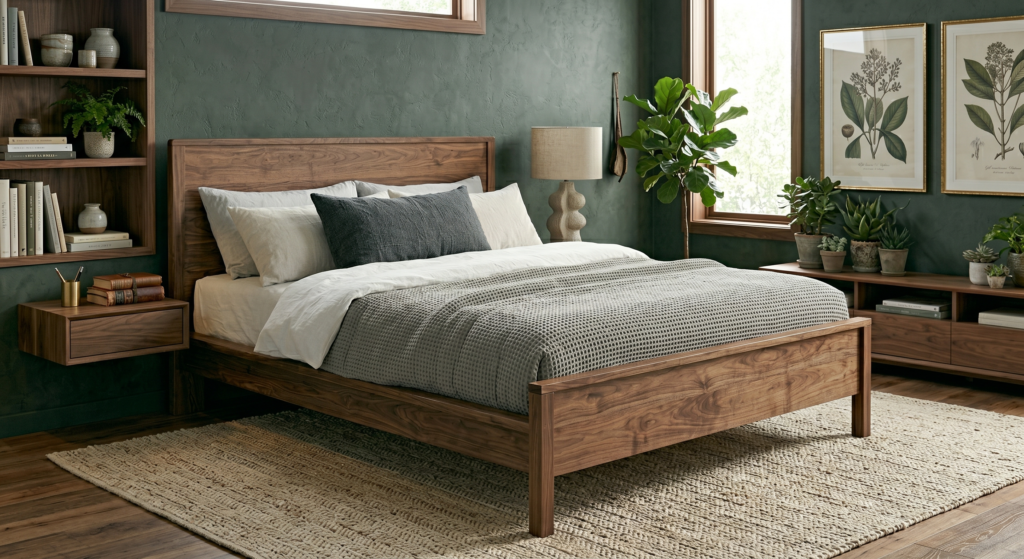
We’ve all been there—trying to relax in bed at night while your laptop sits on the nightstand, its little green light blinking like a reminder of all the emails you didn’t answer. When your office is also your bedroom, it’s hard to ever truly “log off.” Your brain starts to associate your sleep space with stress, and that’s a recipe for a bad night’s rest.
The fix is to create a physical boundary using a ladder desk. These are slim, vertical pieces that lean against the wall, taking up almost no floor space. Set one up in an unused corner. The vertical shelves hold your books and a lamp, while the desktop provides just enough room for a laptop. At the end of the day, you close the computer and walk away. By giving your work a specific “home,” you reclaim your bed as a place for rest only.
Pro-Tip: Buy a beautiful basket that fits on the bottom shelf of the ladder. When 5:00 PM hits, toss your mouse, cords, and notebooks into the basket. If you can’t see the tools of your trade, you won’t think about work.
7. Smart Lighting Dimmer Kits for Better Sleep
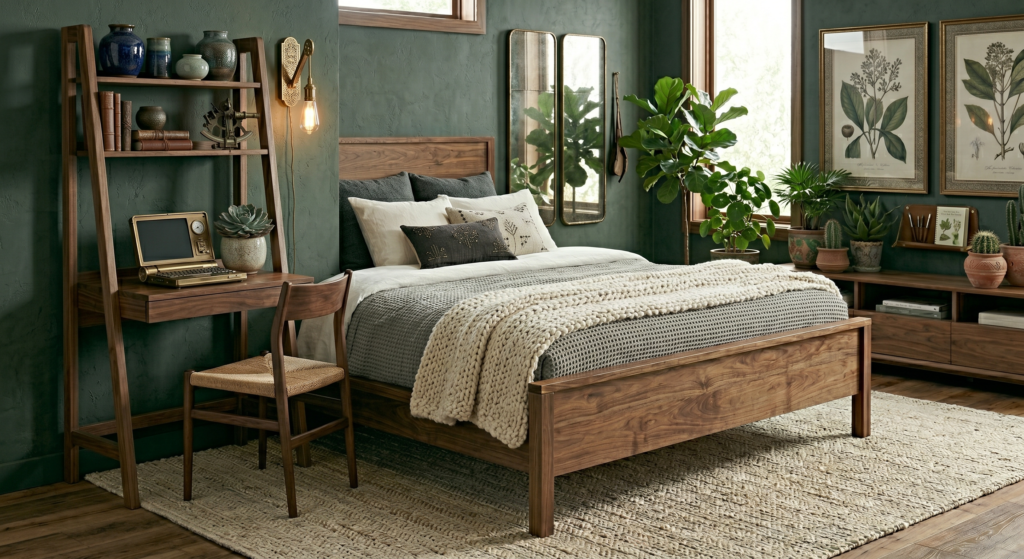
You know that jarring feeling when you’re ready to wind down, but the only light option you have is “stadium bright” or “pitch black”? Flicking on a standard overhead light at 9:00 PM tells your brain it’s high noon. It kills your melatonin and makes it impossible to drift off. You’re left tossing and turning because your room feels like a convenience store.
You don’t need a fancy electrician for this. Head to the hardware store and grab a plug-in dimmer kit. You literally just plug your bedside lamp into the small box, and then plug that into the wall. Now, you can slide the toggle to drop the light levels to a soft, golden glow an hour before bed. It signals to your body that it’s time to sleep. It’s a $15 upgrade that makes your room feel like a high-end spa.
Budget-Friendly Hack: If you can’t change the switch, just swap your bulb for a “Warm Dim” LED. These bulbs actually get warmer in color (more orange, less blue) as you dim them, mimicking a natural sunset.
8. Natural Wood Slat Walls for a Modern Texture
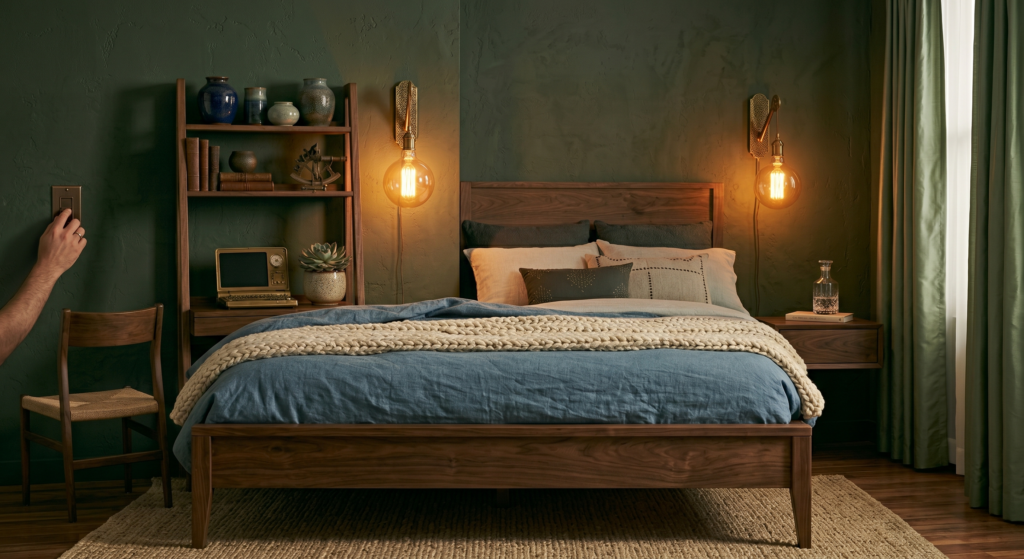
I’ve walked into so many homes where the walls feel flat and lifeless. You hang a few pictures, but something is still missing. The room feels “cold” even if the heat is on. Usually, it’s because everything in the room is a smooth surface—drywall, glass, and flat wood furniture. You need texture to make a space feel finished and expensive.
Wood slat panels are the answer. These vertical wooden strips add instant architectural interest. You don’t need a master carpenter to install them anymore. You can buy pre-made “peel-and-stick” or screw-in panels that come in 8-foot sections. Line them up behind your bed or behind a TV console. The wood adds warmth, and the vertical lines make your walls look much taller than they actually are.
Pro-Tip: Don’t do the whole room; it’ll look like a sauna. Just do one “feature” area, like a four-foot wide section behind your nightstand. It creates a focal point without overwhelming the space.
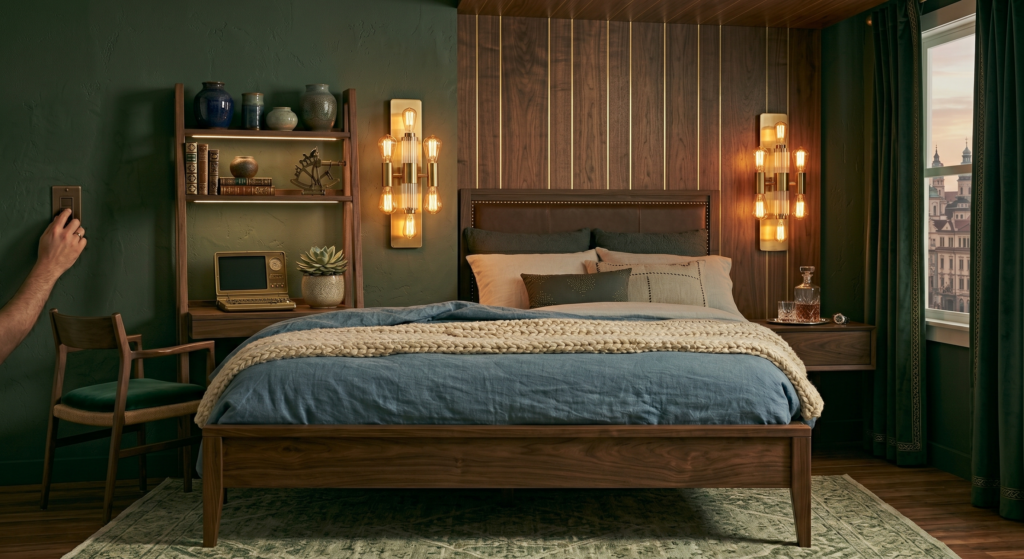
9. Floor-to-Ceiling Mirrors to Double Your Light
Is there anything more depressing than a “cave” bedroom? If your window is small or faces a dark alley, the room can feel gloomy even at noon. You can add more lamps, but artificial light never feels quite the same as the real thing. You end up feeling sluggish and stuck in a dark box.
The oldest trick in my book is the oversized leaning mirror. Don’t settle for a small one you hang on the back of a door. Get a massive, floor-to-ceiling mirror and lean it against the wall directly opposite your window. It acts like a second window, catching every bit of natural light and bouncing it back into the dark corners. It literally doubles the brightness of the room and makes the floor space look like it goes on forever.
Pro-Tip: If you have kids or pets, don’t just lean it. Use a “D-ring” anchor on the back to secure it to a wall stud. It will look like it’s just leaning, but it won’t tip over if someone bumps into it.
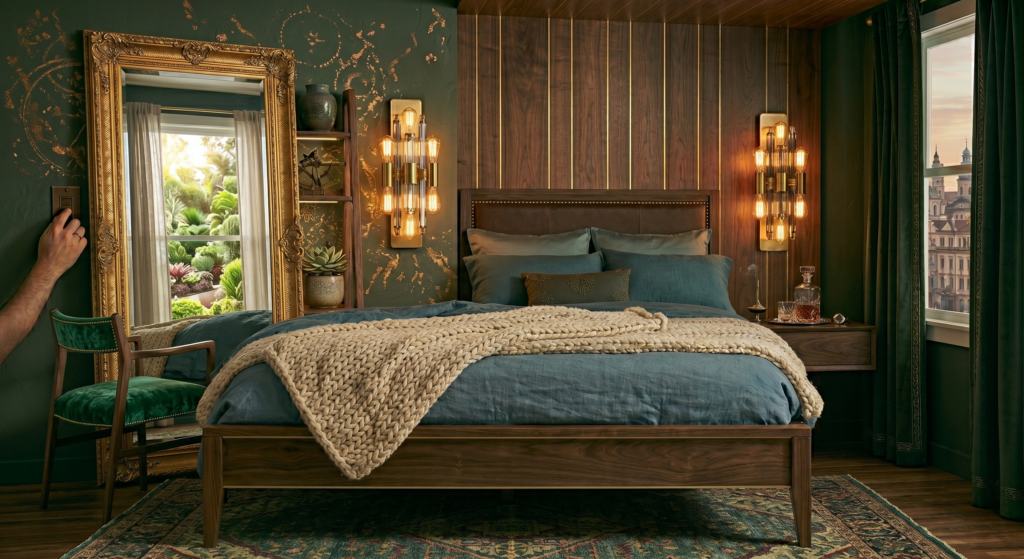
10. Neutral Color Palettes That Aren’t Boring Beige
We’ve all seen those “sad beige” rooms that look like a doctor’s waiting room. People choose neutrals because they’re safe, but then they realize the room has no soul. It feels washed out and bland. You want a calm space, but you don’t want it to be boring or forgettable.
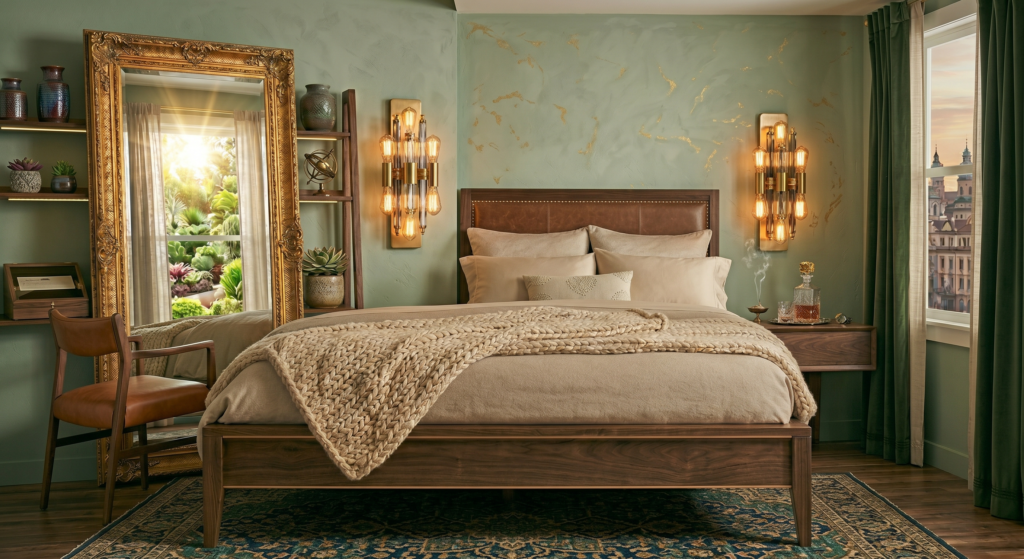
The trick is to move away from “tan” and toward earthy neutrals like soft sage green or “greige” (a mix of grey and beige). These colors still act as a backdrop, so your furniture will look great, but they have enough pigment to change with the light. A soft sage green feels like a breath of fresh air and brings the outdoors in. It’s relaxing for the eyes but still gives the room a definite “personality.”
Pro-Tip: If you’re using neutral paint, bring in “pops” of interest through hardware. Swap your standard plastic light switches for brass ones, or change your dresser knobs to matte black. It breaks up the neutral tones and makes them look intentional.
For more premium decor ideas, follow me on Pinterest.