
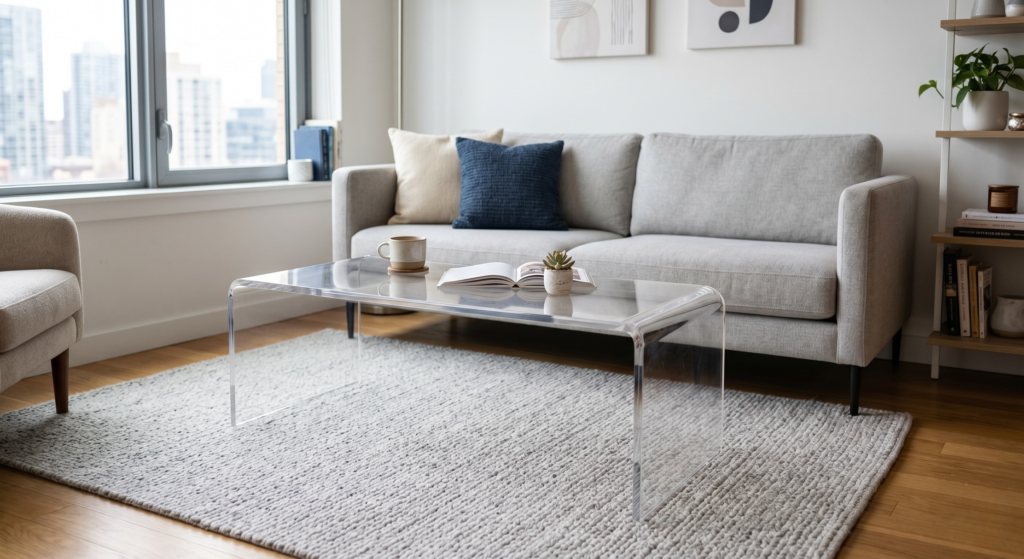
Stop Bumping Your Knees:Use Clear Acrylic Coffee Tables
We’ve all done it—tried to squeeze past a heavy wood coffee table and ended up with a bruised shin and a spilled drink. In a small living room, bulky furniture acts like a roadblock. It stops your eyes and your feet, making the room feel like a cluttered obstacle course.
The Solution
Swap that heavy piece for a clear acrylic or glass coffee table. Because you can see right through it, your brain registers it as “empty space.” It provides the surface area you need for your remote and snacks without the visual weight. For the best flow, keep about 18 inches between the edge of the table and your sofa. This gives you enough legroom to move without feeling like you’re performing an acrobatic act.
If you have kids or pets, look for “molded” acrylic tables with rounded edges. They are virtually indestructible and have no sharp corners for little ones to run into.
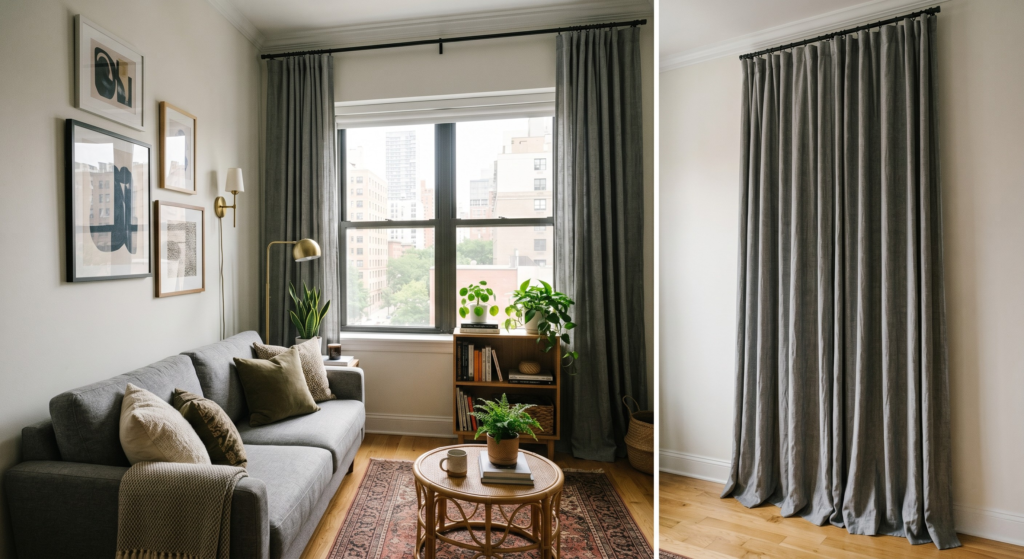
The Illusion of Height: Hang Curtains High
There is nothing worse than that “basement feeling” where the ceiling seems to be resting right on your head. Most people hang curtain rods directly above the window frame. This actually chops your wall in half and makes your windows look squat and sad.
The Solution
I always tell my clients to “go high and wide.” Mount your curtain rod about 2 to 3 inches below the ceiling line (or crown molding). Then, extend the rod about 6 to 10 inches past the sides of the window. This tricks your brain into thinking the window is massive and the walls are soaring. When you pull the curtains open, they’ll rest on the wall, not the glass, letting in every bit of natural light.
Budget-Friendly Hack
You don’t need custom drapes for this. Buy standard 96-inch or 108-inch panels from a big-box store. It’s much cheaper than custom work, and the extra length is exactly what you need to reach the floor from that high rod.
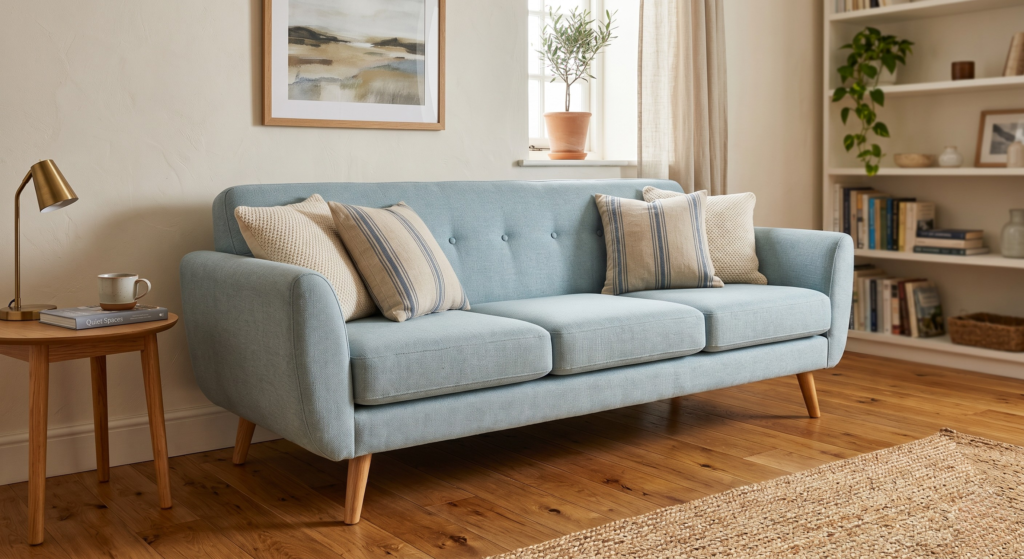
Let the Room Breathe: Choose a Sofa with Exposed Legs
Ever walk into a room and feel like the furniture is just… heavy? If your sofa has a “skirt” or sits flat on the carpet, it acts like a giant visual anchor. It sucks up all the light and makes the floor space look much smaller than it actually is.
The Solution
Look for a sofa with “legs.” Whether they are tapered mid-century style or simple wooden blocks, seeing the floor continue underneath the piece changes everything. When your eye can see the floor extend all the way to the baseboard, the room feels continuous. It’s like the sofa is floating rather than hogging the floor. This also makes cleaning way easier because the dust bunnies have nowhere to hide.
Pro-Tip
If you love your current “skirted” sofa, you can often DIY this. Many sofas have screw-in legs hidden behind the fabric. Remove the skirt, screw in some stylish 6-inch wooden legs from a hardware store, and you’ve got a brand-new look for under $50.
Reclaim Your Floor: Wall-Mount Your TV
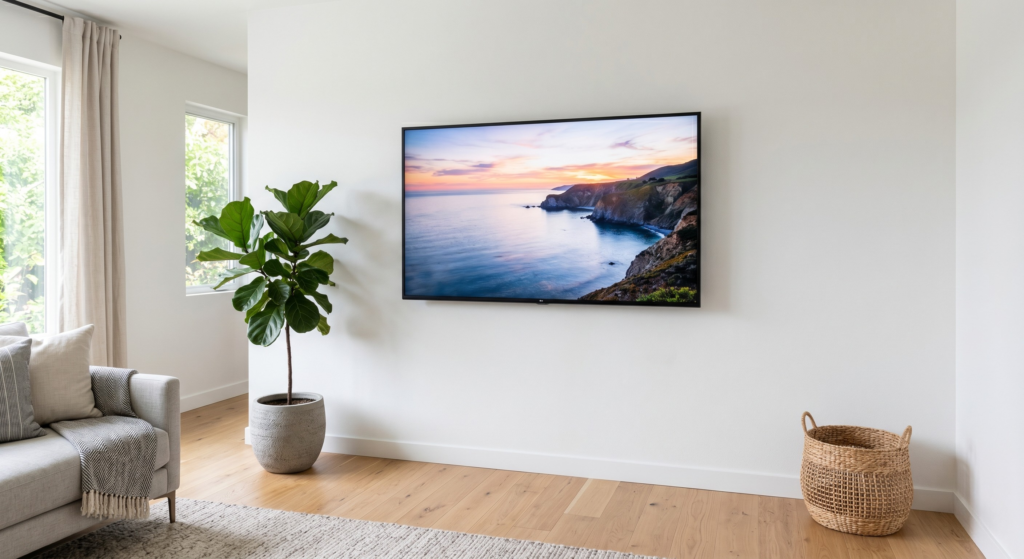
Media consoles are notorious space-wasters. Even the “slim” ones stick out 15 to 20 inches from the wall. In a narrow room, that’s the difference between a comfortable walkway and shuffling sideways like a crab just to get to the kitchen.
The Solution
Get that TV up on the wall. By using a wall mount, you eliminate the need for a bulky piece of furniture underneath. If you still need a place for a cable box or a gaming console, use a small “floating” shelf. This keeps the floor completely clear. When the floor is open, the room feels wider, and you suddenly have a few extra feet of “breathing room” to actually walk around.
Pro-Tip
Hide your wires! You don’t need a pro electrician. Buy a simple cable raceway (a plastic strip that sticks to the wall) and paint it the exact same color as your wall. The wires disappear instantly.
Go Big to Feel Big: Buy a Large Area Rug
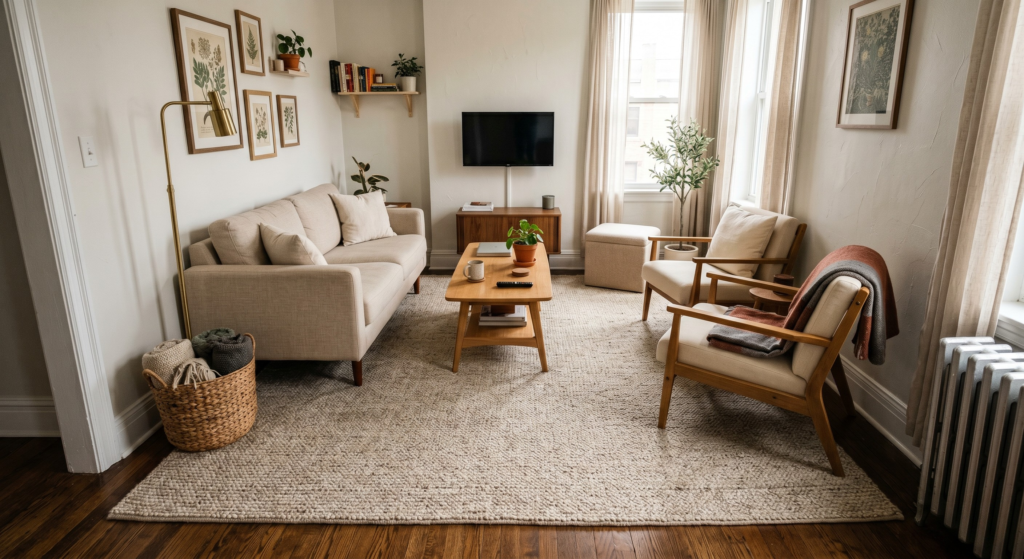
It sounds totally backward, right? People often buy a tiny 5×7 rug for a small room because they think a big rug will overwhelm the space. But a small rug looks like a “postage stamp” in the middle of the floor. It breaks the room into tiny sections and actually makes it feel like a dollhouse.
The Solution
Go for a rug that is large enough for all your furniture to sit on. At the very least, make sure the front legs of your sofa and chairs are resting on the rug. A large rug (usually an 8×10 or 9×12) acts as an anchor that pulls all the separate pieces together into one “zone.” It creates a seamless look that stretches from wall to wall, making the footprint of the room feel much more generous.
Pro-Tip
Can’t afford a massive, plush rug? Buy a cheap, large jute or seagrass rug to cover the floor, then “layer” a smaller, prettier rug on top of it. You get the scale you need without breaking the bank.
Stop Bumping Your Knees: Swap Big Coffee Tables for Nesting Tables
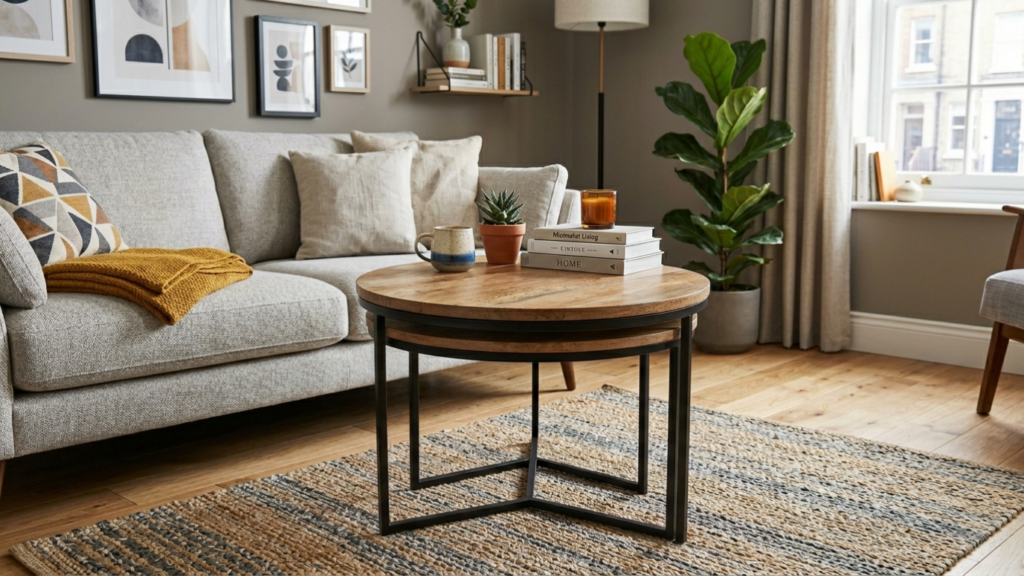
We’ve all been there—trying to squeeze past a heavy wood coffee table and ending up with a bruised shin. In a tight living room, a massive center table acts like a roadblock. It stops your eyes and your feet, making the whole room feel like an obstacle course you didn’t sign up for.
The Solution
Ditch the “one-size-fits-all” coffee table for a set of nesting tables. These are usually two or three tables of varying heights that slide right under each other. During the day, keep them tucked away to clear a path. When you have friends over or need a spot for your pizza box, just slide them out. This keeps your floor open while giving you surfaces exactly where you need them.
Pro-Tip
If you have a movie night, move the smaller nesting tables to the ends of the sofa. It keeps the center of the room open so the space feels twice as big while everyone still has a spot for their drink.
The Seamless Look: Paint Walls and Trim the Same Light Color
Have you ever noticed how a room feels “choppy” when the walls are grey but the baseboards and window frames are bright white? It creates a visual outline that screams, “Look how small this box is!” It forces your brain to stop at every edge and corner.
The Solution
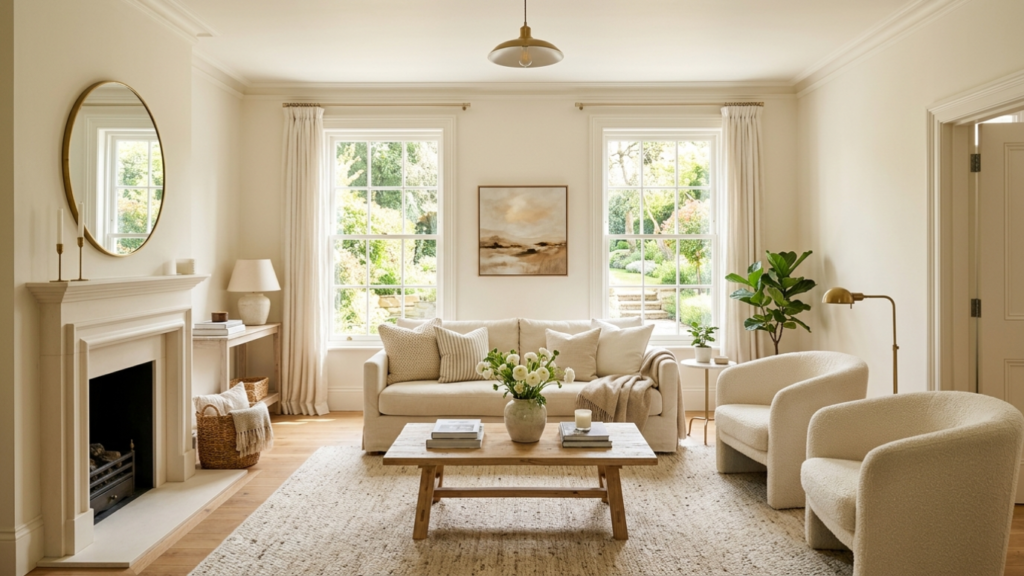
Paint your walls, baseboards, and crown molding the exact same light color. When the trim matches the wall, those hard lines disappear. Your eye travels from the floor to the ceiling without stopping, which tricks your brain into thinking the walls are much further away. Use a “flat” finish for the walls and a “satin” or “semi-gloss” in the same color for the trim to keep it durable.
Budget-Friendly Hack
You don’t even have to buy new paint if you have leftover wall paint. Just ask the paint store to mix a quart of trim paint in that same color code. It’s a weekend project that makes a $500 impact for about $30.
Double the Light: Place Big Mirrors Opposite Your Windows
Dark rooms always feel smaller. If you have a room with only one window, it can feel like a cave by 3:00 PM. You might try adding more lamps, but artificial light doesn’t always hit the same way as the sun.
The Solution
Find a large mirror and hang it directly across from your biggest window. It acts like a second window by catching the natural light and bouncing it back into the dark corners of the room. Not only does it brighten things up, but the reflection adds “virtual” square footage. It’s the oldest trick in my book because it works every single time.
Pro-Tip
Go big or go home here. A tiny mirror won’t do much. Look for a floor-length mirror and lean it against the wall opposite the window for a relaxed, high-end designer look.
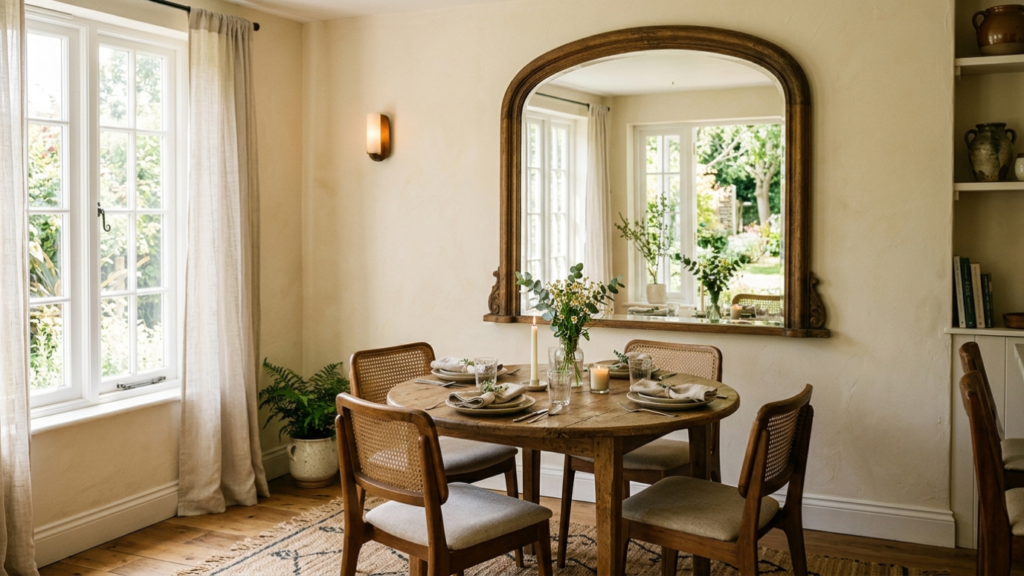
Size Matters: Pick Loveseats Instead of Massive Sectionals
We all love the idea of a giant sectional that seats ten people, but in a real-life small living room, those couches are “room killers.” They take up so much floor space that you can’t fit a side table or a lamp, leaving the room feeling lopsided and crowded.
The Solution
Choose a deep, comfy loveseat or a “small-scale” sofa instead. You can still get that “sink-in” feeling with deep cushions without the sofa touching both walls. Leaving just 12 inches of space on either side of your seating allows you to add a slim end table or a floor lamp. This creates a much more functional and balanced layout where you aren’t trapped in a corner.
Pro-Tip
Look for a loveseat with “track arms”—these are thin, straight arms. “Rolled arms” can add an extra 10 inches to the width of a couch without adding any extra sitting space!
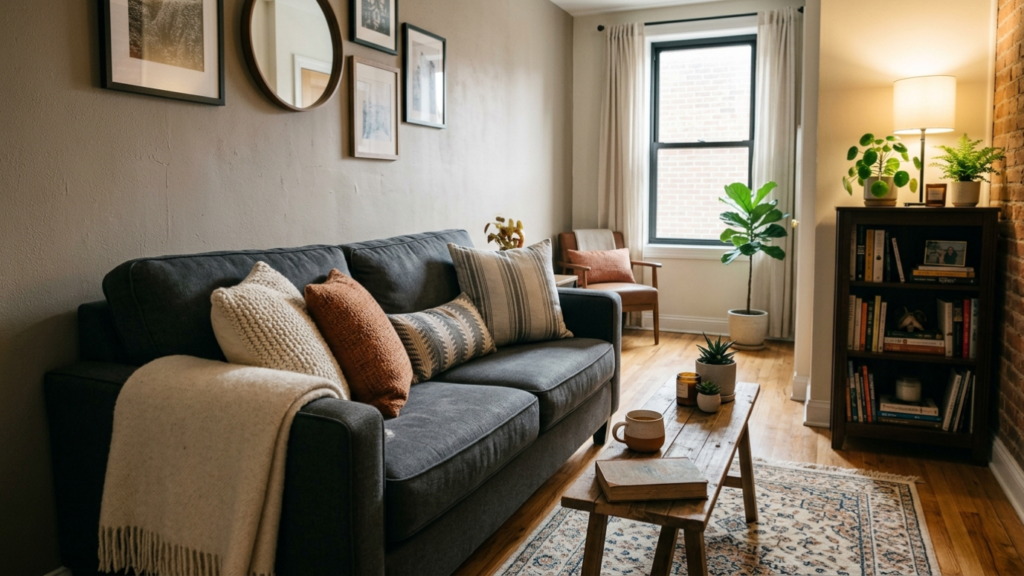
Clear the Floor: Install Floating Wall Shelves
Bookcases are great, but they are furniture “anchors.” They sit on the floor and lean into your walking path. If you have a narrow hallway or a small home office, a standard bookshelf can make the room feel like it’s closing in on you.
The Solution
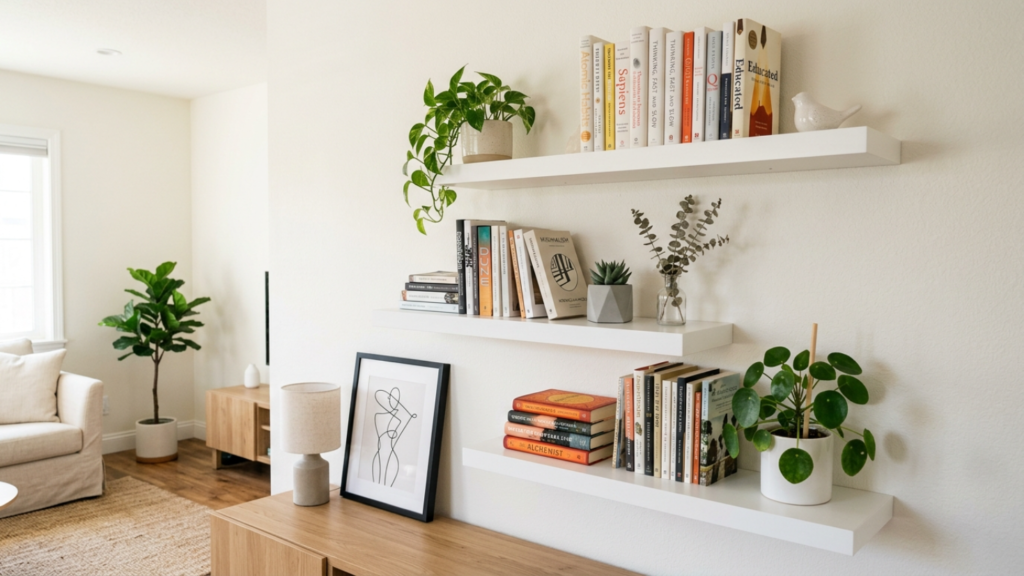
Take your library to the walls. Floating shelves use the vertical space that is usually wasted. By mounting your books and decor up high, you keep the floor totally clear. This makes the room feel much wider because you can see the baseboards. It also gives you a chance to turn your favorite items into a piece of art.
Budget-Friendly Hack
Instead of buying expensive shelving systems, use simple “L-brackets” from the hardware store and pieces of common pine board. Paint the boards the same color as your wall (remember trick #7?) to make the shelves look built-in.
For more premium decor ideas, follow me on Pinterest.